
The Cumulative Flow Diagram (CFD). Maybe you’ve been told it can help you better understand the flow of work, identify bottlenecks, and get a sense how long work items will take to complete. It sounds intriguing, but…how exactly do you read it? What is it trying to tell you?

We're thrilled to sit down with Mark Grove, an accomplished agile coach and foremost expert on the Kanban method. As an agile thought leader, Mark has dedicated his career to helping teams embrace an agile mindset to enhance performance and deliver continuous value.

The Cumulative Flow Diagram (CFD). Perhaps you’ve heard of it. Maybe you’ve been told it can help you better understand the flow of work, identify bottlenecks, and get a sense how long work items take to complete. It sounds intriguing, but…how exactly do you read it? What is it trying to tell you? And… Could the CFD be more helpful than a burndown chart?
In this part lecture, part workshop presentation, we’ll take a closer look at what a CFD is, how it’s constructed, and, most importantly, how to interpret what you’re observing. Being able to identify patterns in your CFD is a valuable skill to better understand how work flows across your Scrum or Kanban board.

In this part lecture, part workshop presentation, we took a closer look at what a Cumulative Flow Diagram (CFD) is, how it’s constructed, and, most importantly, how to interpret what you’re observing.
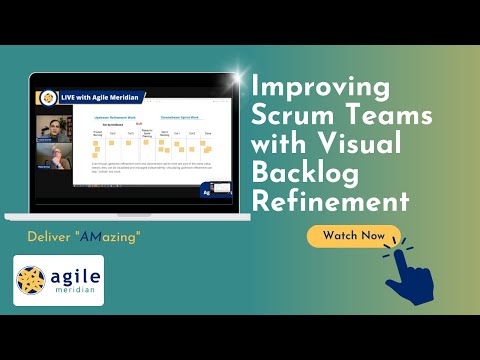
Visualize your work! That's the first rule of Kanban, and in this episode, we examine how this rule can be applied to Scrum teams to help them become more efficient.

Imagine you were hired to provide consulting assistance for a new team just starting out with Kanban. The team has been struggling with their implementation and is looking forward to your expert guidance, support, and advice. What comments would you make? What thoughtful questions would you ask?

Is your team losing its way during backlog refinement? Does refinement contain “hidden” work difficult to account for? Is a Definition of Ready weakly applied? Do you even have one? Borrowing lessons from the Kanban method, we look how to visualize a team’s backlog refinement process using a backlog refinement board.

The Cumulative Flow Diagram (CFD). Maybe you’ve been told it can help you better understand the flow of work, identify bottlenecks, and get a sense how long work items will take to complete. It sounds intriguing, but…how exactly do you read it? What is it trying to tell you?

Improve delivery predictability by learning how to right-size work using cycle time data and Cycle Time Distribution (CTD) charts. Discover how workflow variability, uncertainty, and wait times impact delivery, and why traditional sizing approaches often fail in complex, AI, and data-driven environments.